PROTOCOLES CLINIQUES FONDÉS SUR LES DONNÉES PROBANTES
Ne passez plus vos séances à « éteindre des incendies ».
4 protocoles ABA, étape par étape, pour intervenir face aux crises, à l’agressivité, aux refus et aux comportements répétitifs.
Chaque situation nécessite une démarche différente. Retrouvez rapidement les objectifs, les étapes d’intervention et les indicateurs de progression à utiliser en séance.
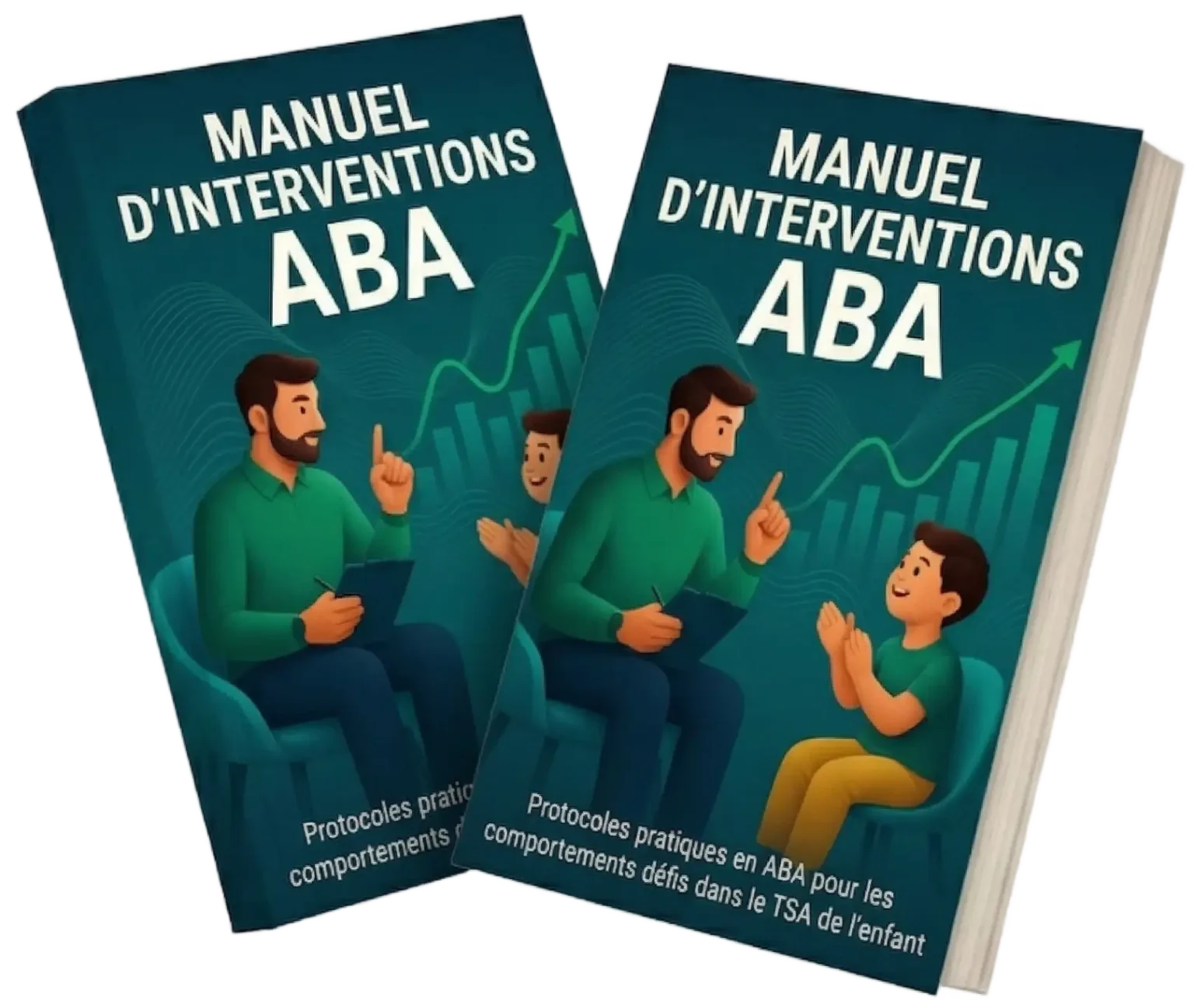

+2.500 professionnels utilisent déjà ces protocoles
⭐⭐⭐⭐⭐ 4,8/5 — Évalué par des thérapeutes, des psychologues et des éducateurs spécialisés
- Accès immédiat au format PDF
- Protocoles faciles à consulter
- Fondé sur les principes de l’ABA
- Utilisable en cabinet, à l’école ou à domicile
- Accès immédiat par e-mail · Paiement 100 % sécurisé
À qui s’adressent ces protocoles ?
Si vous travaillez directement auprès d’enfants autistes et que vous avez besoin d’un cadre clair lorsque la situation s’intensifie, ces protocoles sont faits pour vous.
Professionnels de l’ABA et psychologues
Ils disposent d’une solide formation théorique, mais peuvent manquer de repères clairs lorsque l’enfant entre en crise.
Avec ces protocoles, ils disposent d’une démarche structurée, étape par étape, sans dépendre uniquement de l’intuition.
Orthophonistes et ergothérapeutes
Ils rencontrent des comportements difficiles dans leur pratique, sans toujours avoir reçu de formation approfondie aux protocoles ABA.
Ce manuel leur apporte un cadre structuré, adaptable au contexte de leurs séances.
Éducateurs, accompagnants et intervenants
Ils font face à des crises, des refus ou des comportements agressifs à l’école ou dans les différents lieux de vie.
Ils y trouveront des repères clairs pour mieux comprendre la situation et organiser leur intervention avec davantage de sécurité.
Parents et aidants
Ils ne savent pas toujours comment réagir pendant une crise et se demandent souvent s’ils auraient pu agir autrement.
Ce matériel les aide à mieux comprendre les facteurs qui peuvent influencer le comportement et à répondre de manière plus structurée et sécurisante.
Si votre travail implique l’accompagnement d’enfants autistes confrontés à des comportements difficiles, ce manuel a été conçu pour vous.
Que contient le Manuel d’Interventions ABA ?
4 protocoles cliniques complets, chacun consacré à une situation spécifique, avec un objectif clair, des étapes structurées et des indicateurs de progression mesurables.
PROTOCOLE 1 — Crises intenses
Comportement : Crises, effondrements émotionnels et pleurs intenses visant à obtenir de l’attention ou l’accès à un objet.
Technique : FCT — Entraînement à la communication fonctionnelle
CE QUE VOUS APPRENDREZ :
- Comment identifier la fonction de la crise avant d’intervenir.
- Les 5 étapes pour apprendre à l’enfant à formuler une demande sans avoir besoin de crier ou de pleurer.
- Comment gérer le « pic d’extinction », lorsque le comportement s’intensifie temporairement avant de diminuer, sans céder.
PROTOCOLE 2 — Agressivité et automutilation
Comportement : Coups, morsures et comportements auto-agressifs liés à la frustration ou à l’évitement d’une demande.
Technique : DRI — Renforcement différentiel d’un comportement incompatible
CE QUE VOUS APPRENDREZ :
- Un protocole de sécurité physique pour bloquer le comportement sans aggraver la situation.
- Comment apprendre à l’enfant à exprimer sa frustration de manière plus sûre.
- Pourquoi toute manifestation agressive nécessite d’abord d’écarter une cause médicale, et comment l’expliquer à la famille.
PROTOCOLE 3 — Refus et opposition aux activités
Comportement : Non-coopération, évitement des tâches et refus actif de participer à la séance.
Technique : Pairing actif + principe de Premack
CE QUE VOUS APPRENDREZ :
- Les 3 phases du pairing pour construire la motivation à partir de zéro.
- Comment structurer les premières semaines sans renforcer davantage le refus.
- Le ratio 4:1 : combien d’interactions positives prévoir avant chaque demande.
PROTOCOLE 4 — Comportements répétitifs préjudiciables
Comportement : Mouvements répétitifs qui entravent l’apprentissage ou entraînent une exclusion sociale.
Technique : DRO — Renforcement différentiel d’autres comportements
CE QUE VOUS APPRENDREZ :
- Quand intervenir et quand ne pas intervenir face à un comportement répétitif.
- Comment établir une ligne de base et déterminer l’intervalle initial approprié.
- Comment l’enrichissement de l’environnement peut réduire la fréquence jusqu’à 40 %, sans intervention directe.
Chaque protocole comprend également :
🎯 Un objectif clinique clairement défini
📋 Des fiches de suivi prêtes à l’emploi
👣 Des instructions détaillées, étape par étape
📊 Des indicateurs de progression mesurables
🔄 Des stratégies de généralisation à la maison et à l’école
👨👩👧 Des modèles de compte rendu destinés aux familles
Un protocole pour chaque situation. Sans improviser. Sans deviner.
En plus du manuel, vous recevez 4 ressources cliniques prêtes à l’emploi
Conçues pour compléter chaque protocole et faciliter leur mise en pratique dès la première semaine.
BONUS 01
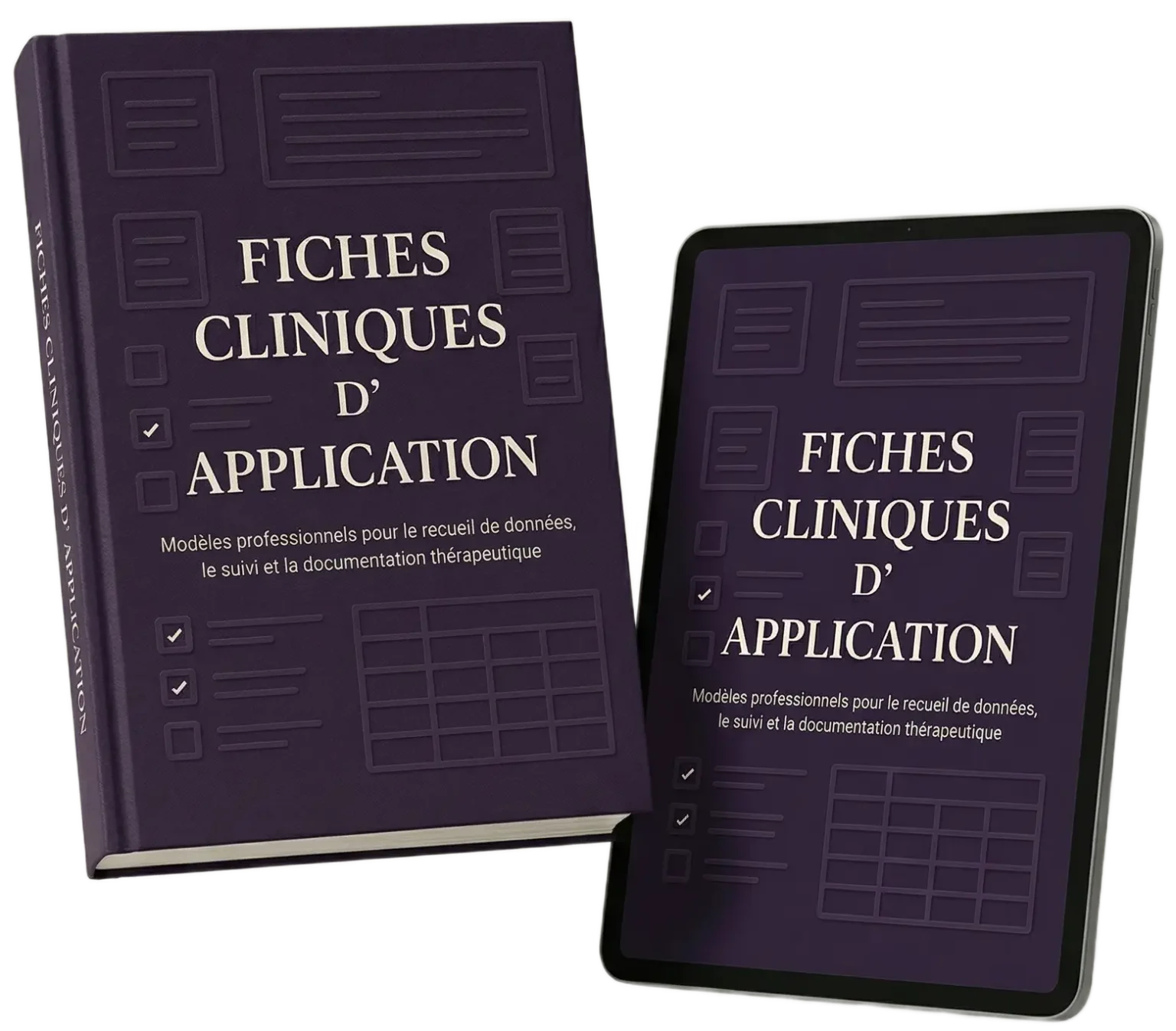
Fiches Cliniques d’Application
Des modèles prêts à l’emploi pour consigner chaque séance, noter les réactions de l’enfant et documenter les progrès de manière objective.
Valeur : 15 €
➡️ AUJOURD’HUI : OFFERT
BONUS 02
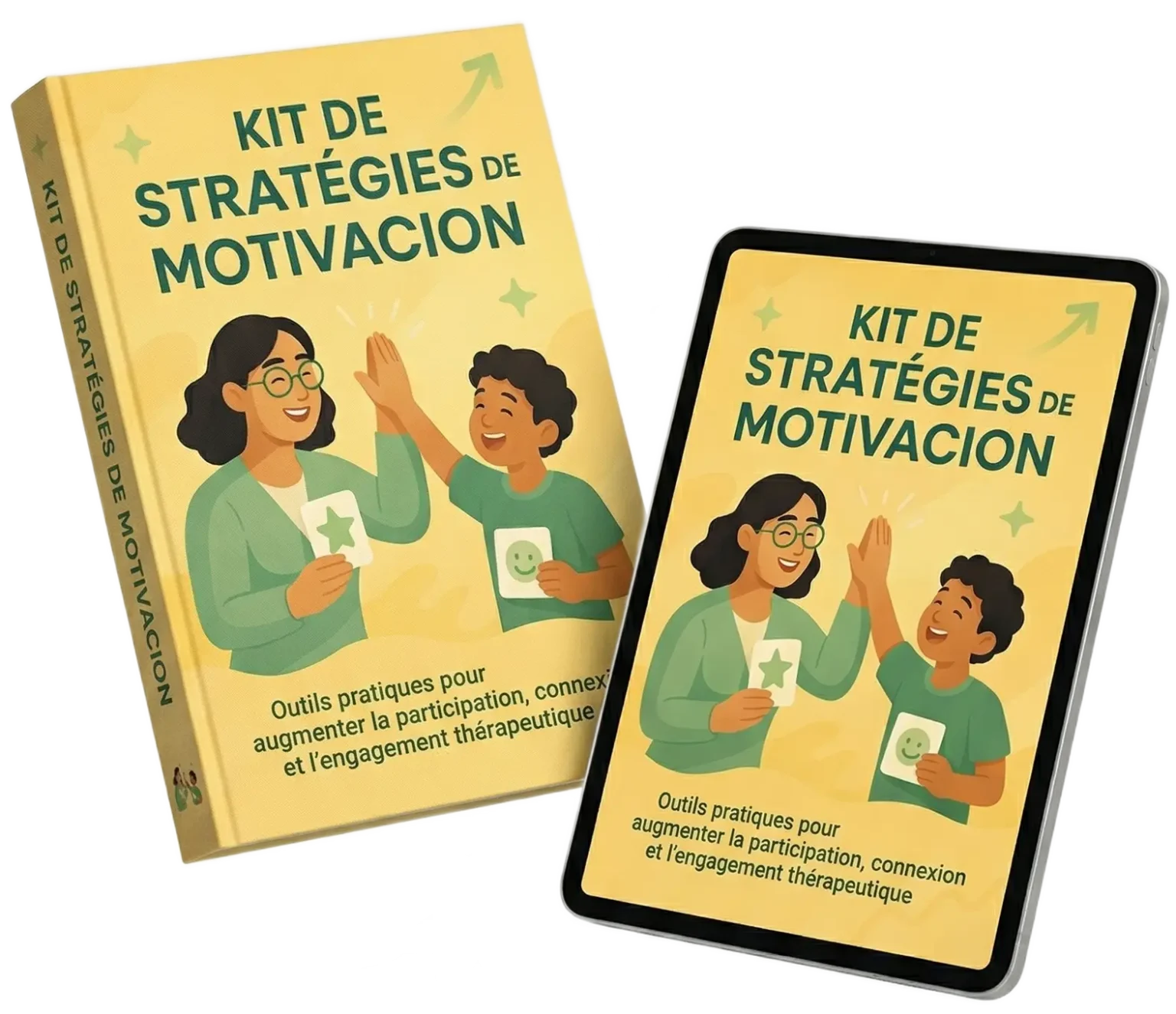
Kit de Stratégies de Motivation et d’Engagement
Des outils pratiques pour renforcer l’engagement de l’enfant, réduire les refus et favoriser une participation active dès le début de la séance.
Valeur : 13 €
➡️ AUJOURD’HUI : OFFERT
BONUS 03
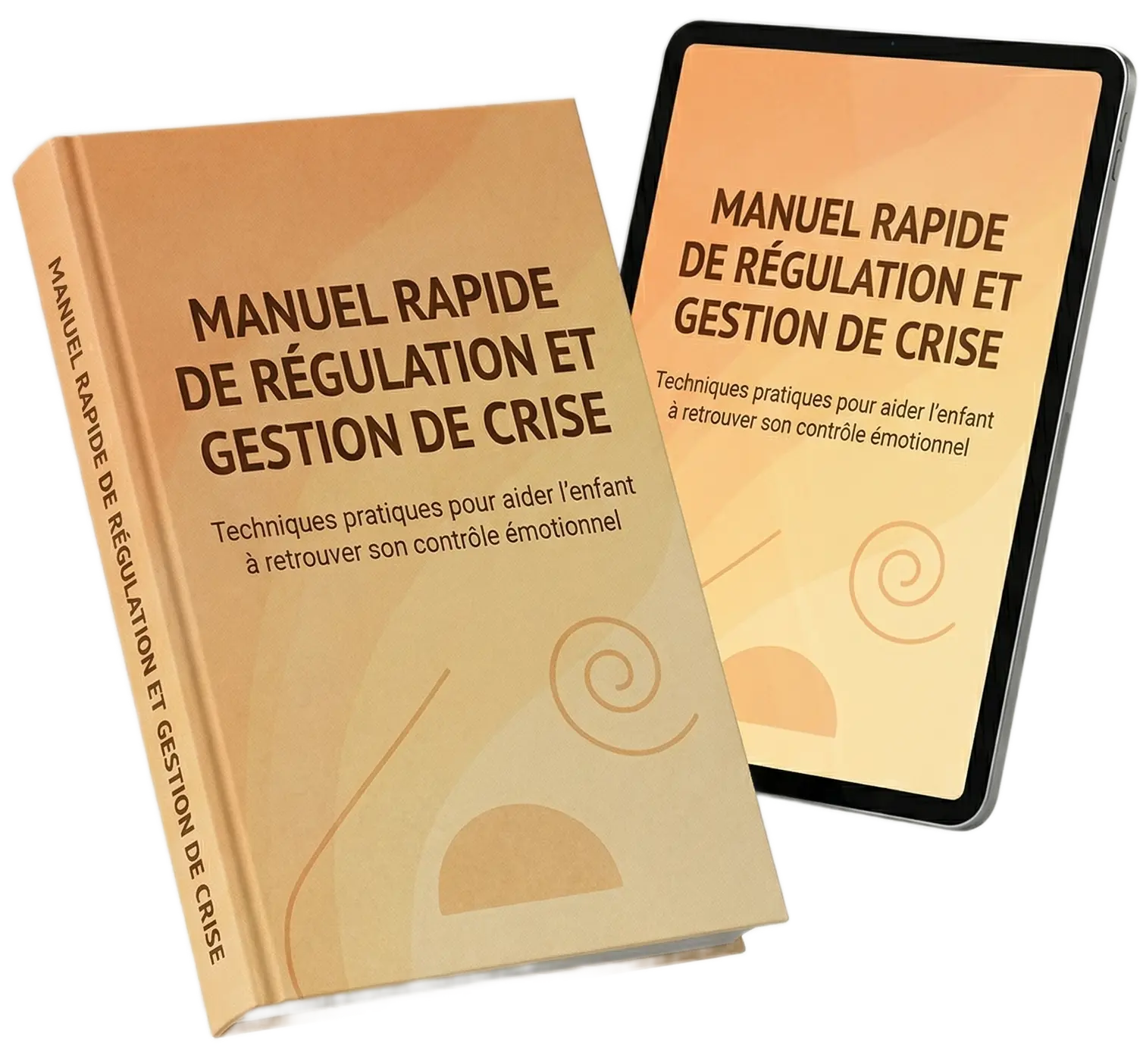
Manuel Rapide de Régulation et de Gestion de Crise
Une ressource à consulter immédiatement lorsque l’enfant entre en crise. Des étapes claires et un langage direct, pour savoir comment organiser votre réponse sur le moment.
Valeur : 16 €
➡️ AUJOURD’HUI : OFFERT
BONUS 04
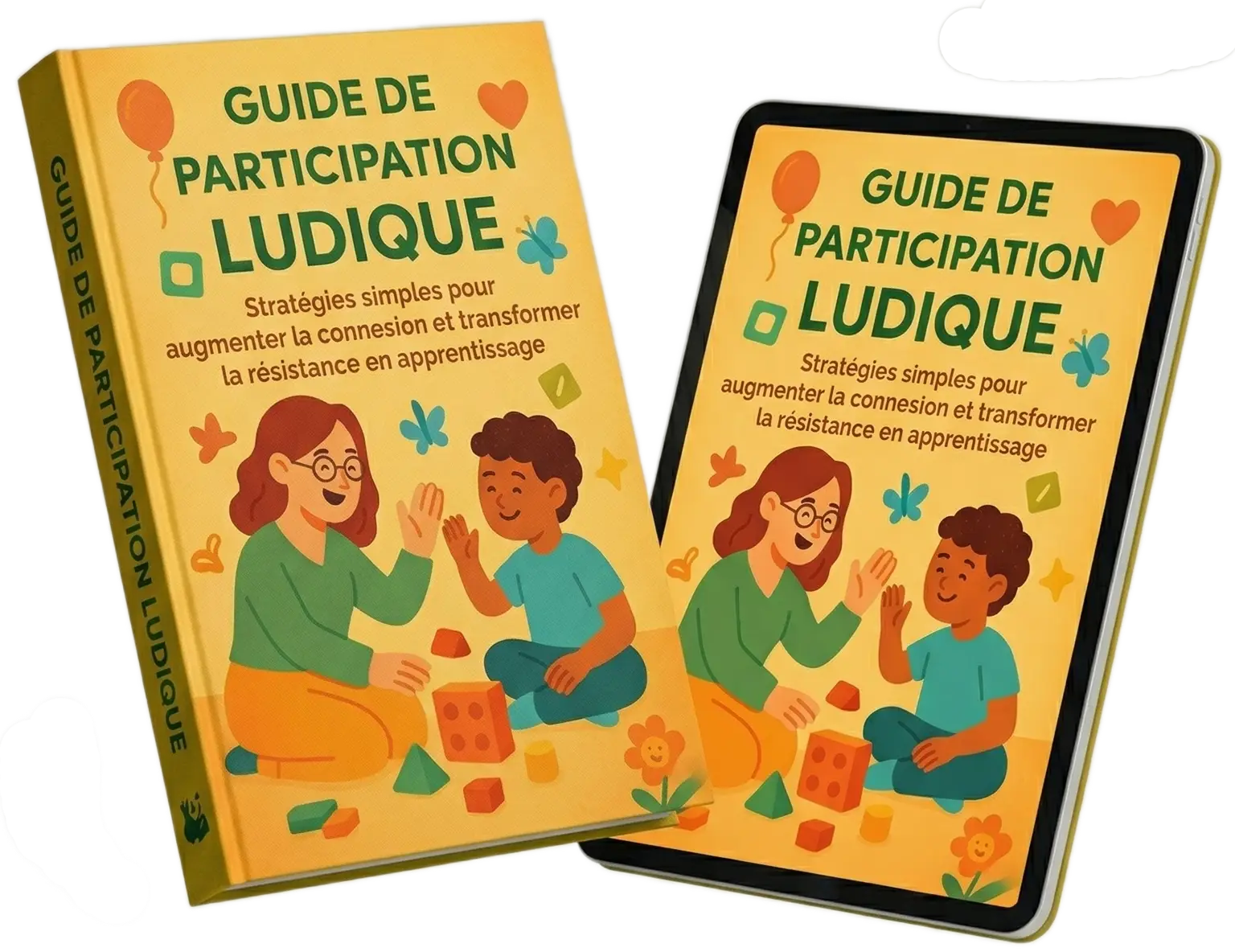
Guide de Participation Ludique
Des stratégies pour transformer les moments de résistance en occasions d’apprentissage, en utilisant le jeu comme point d’entrée.
Valeur : 12 €
➡️ AUJOURD’HUI : OFFERT
Le tout au format PDF haute qualité, avec un accès immédiat. Imprimable et utilisable en cabinet, à l’école ou à domicile.
Tout ce que vous recevez aujourd’hui :
- Manuel d’Interventions ABA
70 €
- Bonus 01 — Fiches Cliniques d’Application
15 €
- Bonus 02 — Kit de Stratégies de Motivation et d’Engagement
13 €
- Bonus 03 — Manuel Rapide de Régulation et de Gestion de Crise
16 €
- Bonus 04 — Guide de Participation Ludique
12 €
- Accès à vie + mises à jour
10 €
- VALEUR TOTALE
136 €
OFFRE SPÉCIALE AUJOURD’HUI
Au lieu de 136 € seulement
14,90
€
- Paiement 100 % sécurisé
- Accès immédiat par e-mail
- Paiement 100 % sécurisé
- Accès immédiat par e-mail
Prix spécial disponible pour une durée limitée
Si vous quittez cette page, l’accès au matériel complet avec tous les bonus pourrait ne plus être proposé au même prix.

Garantie inconditionnelle de 30 jours
Vous disposez de 30 jours complets pour utiliser les protocoles dans vos séances. Si, pour quelque raison que ce soit, vous estimez que le matériel ne tient pas ses promesses, nous vous remboursons 100 % de votre achat — sans question et sans démarche compliquée.
Nous assumons le risque. Vous gardez l’esprit tranquille.
Ce qu’en disent les professionnels qui l’utilisent déjà
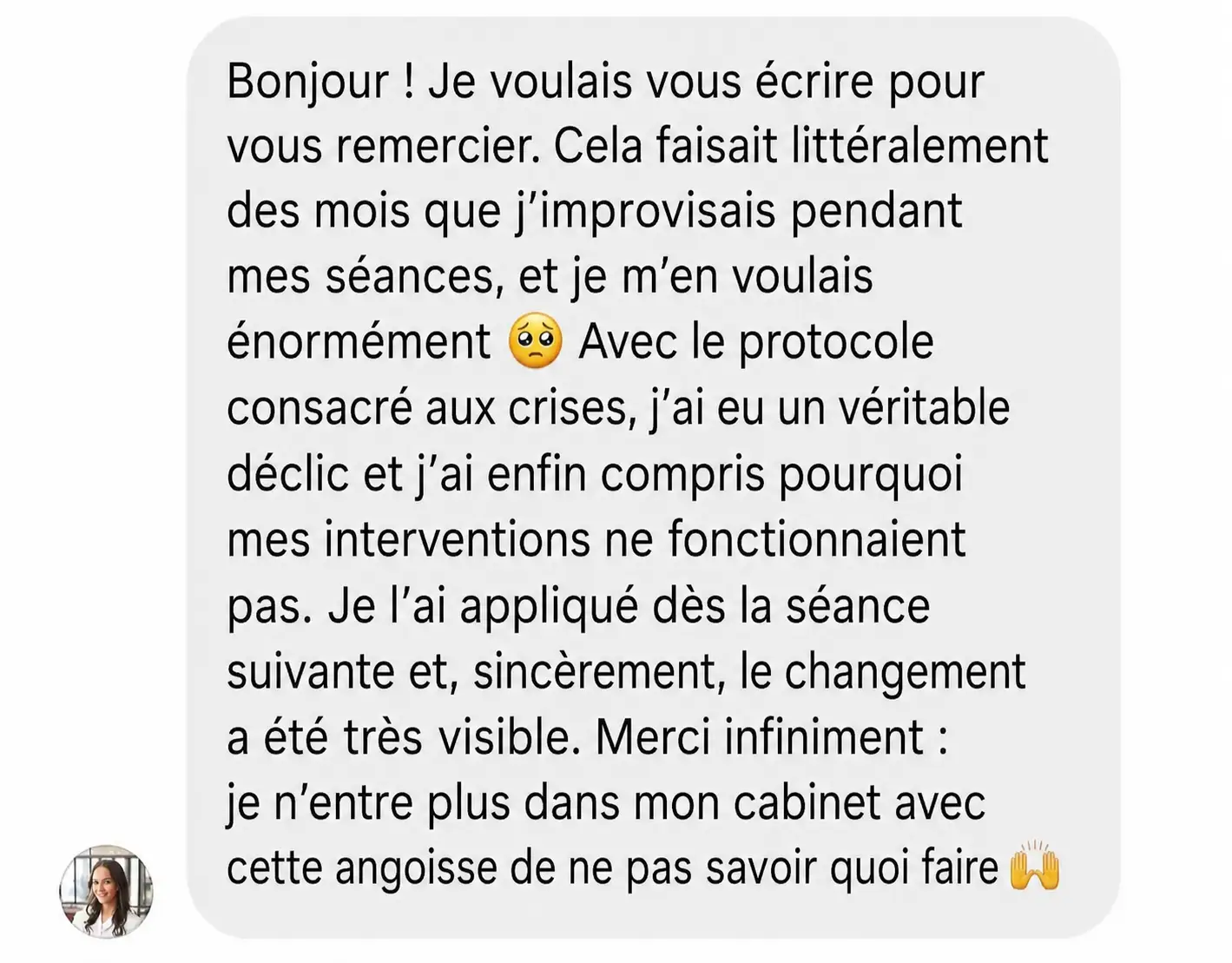
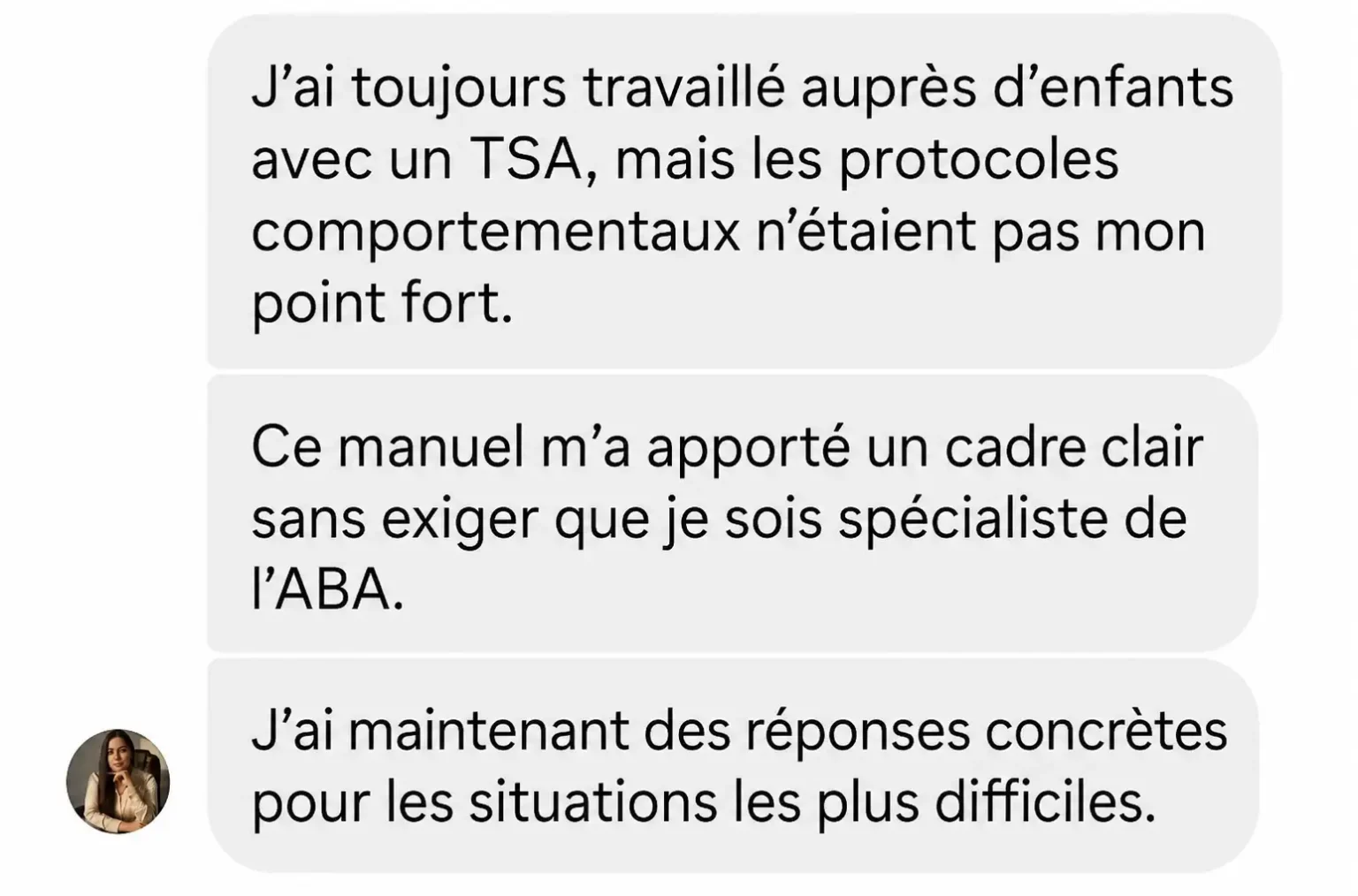
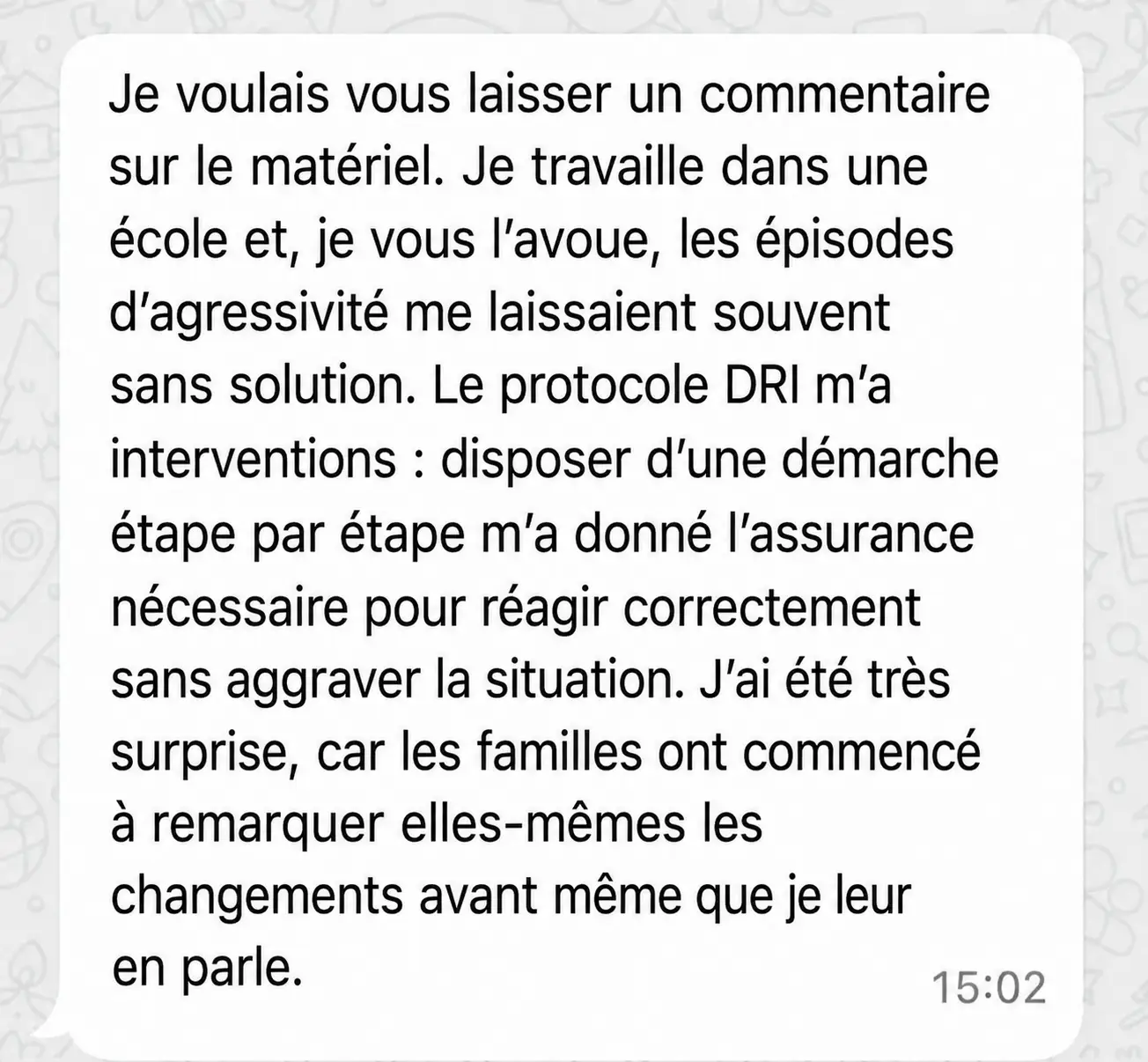

Plus de 2 500 professionnels ont déjà fait ce choix. Le protocole dont vous avez besoin est ici.
Questions fréquentes
Non. Chaque protocole est rédigé dans un langage clinique accessible, avec des instructions détaillées que vous pouvez suivre même sans formation officielle en ABA.
Les psychologues, orthophonistes, ergothérapeutes, éducateurs et accompagnants peuvent utiliser ce matériel dans leur contexte professionnel. Si vous connaissez déjà l’ABA, le manuel vous apporte une structure pratique. Dans le cas contraire, il constitue un point de départ clair.
Ils ont été conçus pour accompagner différentes situations comportementales chez les enfants autistes, quel que soit leur niveau de soutien.
Chaque protocole propose des adaptations permettant d’ajuster la démarche au profil, aux capacités et au contexte de l’enfant.
Immédiatement. Dès que votre paiement est confirmé, vous recevez un e-mail contenant votre lien d’accès.
Vous pouvez télécharger tous les fichiers en quelques secondes, sans attente ni démarche supplémentaire.
Le matériel est réservé à un usage personnel et professionnel individuel.
Pour que plusieurs membres d’une équipe disposent de leur propre accès, chacun doit acquérir sa propre copie.
Le matériel est conçu pour une utilisation pratique. Chaque protocole présente un objectif clair, une démarche structurée et des étapes d’application.
Vous pouvez consulter le manuel avant ou pendant la préparation d’une séance afin d’organiser votre intervention avec davantage de clarté.
Le manuel présente des variables d’ajustement pour chaque protocole : éléments à réévaluer, adaptations possibles et indications permettant de modifier la stratégie.
Vous bénéficiez également d’une garantie inconditionnelle de 30 jours. Si le matériel ne répond pas à vos attentes, vous pouvez demander le remboursement intégral de votre achat.
Tout est inclus : le manuel complet, les quatre bonus, l’accès à vie et les futures mises à jour.
Il s’agit d’un paiement unique, sans abonnement ni frais cachés.

Assistance officielle
- contact@sensoriapro.com
- Du lundi au samedi : de 9 h à 18 h


Sécurité
- Environnement 100 % sécurisé
- Certificat SSL
- © 2026 SensoriaPro · Tous droits réservés.